Pattern Recognition in Session Data Shaping Customized Incentives Across Live Mobile Wagering Ecosystems
Written by Ines Coleman · Oct 12, 2026

Pattern Recognition in Session Data Shaping Customized Incentives Across Live Mobile Wagering Ecosystems
Pattern recognition systems process vast streams of session data generated during live mobile wagering sessions, where algorithms identify behavioral sequences that inform the delivery of tailored incentives to individual users across platforms operating in October 2026. These systems track metrics such as bet frequency, session duration, game type selection, and response times to live dealer interactions, then apply clustering methods to group similar activity profiles before generating reward structures that align with observed patterns.
Data Collection Mechanisms in Mobile Wagering Sessions
Operators gather session data through integrated APIs that capture every action within mobile applications, including wager amounts, timing between bets, navigation paths through live dealer lobbies, and device-specific variables like screen resolution or connection stability. Researchers at institutions such as the UNLV International Gaming Institute have documented how these data points accumulate at rates exceeding thousands of events per user per hour during peak periods, enabling machine learning models to detect recurring sequences that precede specific engagement behaviors.
Session logs also incorporate contextual elements such as time of day, geographic location signals, and previous incentive redemption history, which feed into supervised learning frameworks that refine prediction accuracy over successive weeks. Data shows that platforms processing these inputs in real time achieve higher retention metrics compared to static reward systems, according to aggregated industry reports released during the third quarter of 2026.
Algorithmic Approaches to Pattern Identification
Techniques such as sequence mining and recurrent neural networks analyze temporal patterns within session streams to isolate high-value behavioral signatures, for instance distinguishing between users who favor rapid-fire sports wagers versus those who engage in extended live casino rounds. These models operate on anonymized datasets that comply with regional data protection standards, while feature extraction processes isolate variables like average stake escalation rates and interruption frequencies that correlate with distinct player archetypes.
One study from European regulatory monitoring bodies revealed that pattern recognition engines correctly anticipate 78 percent of session extension events when trained on multi-week mobile datasets, allowing operators to trigger micro-incentives at precise moments. The reality is that hybrid approaches combining decision trees with deep learning layers have gained traction because they balance computational efficiency with the granularity required for live mobile environments where latency must remain under 200 milliseconds.
Customization of Incentives Through Recognized Patterns
Once patterns stabilize within user profiles, systems map them to incentive categories such as deposit match percentages, free bet credits, or exclusive live table access windows that activate automatically during subsequent sessions. For example, algorithms that detect prolonged evening engagement on specific live roulette variants may allocate time-limited multipliers that appear only on those tables, thereby sustaining momentum without disrupting overall platform economics.
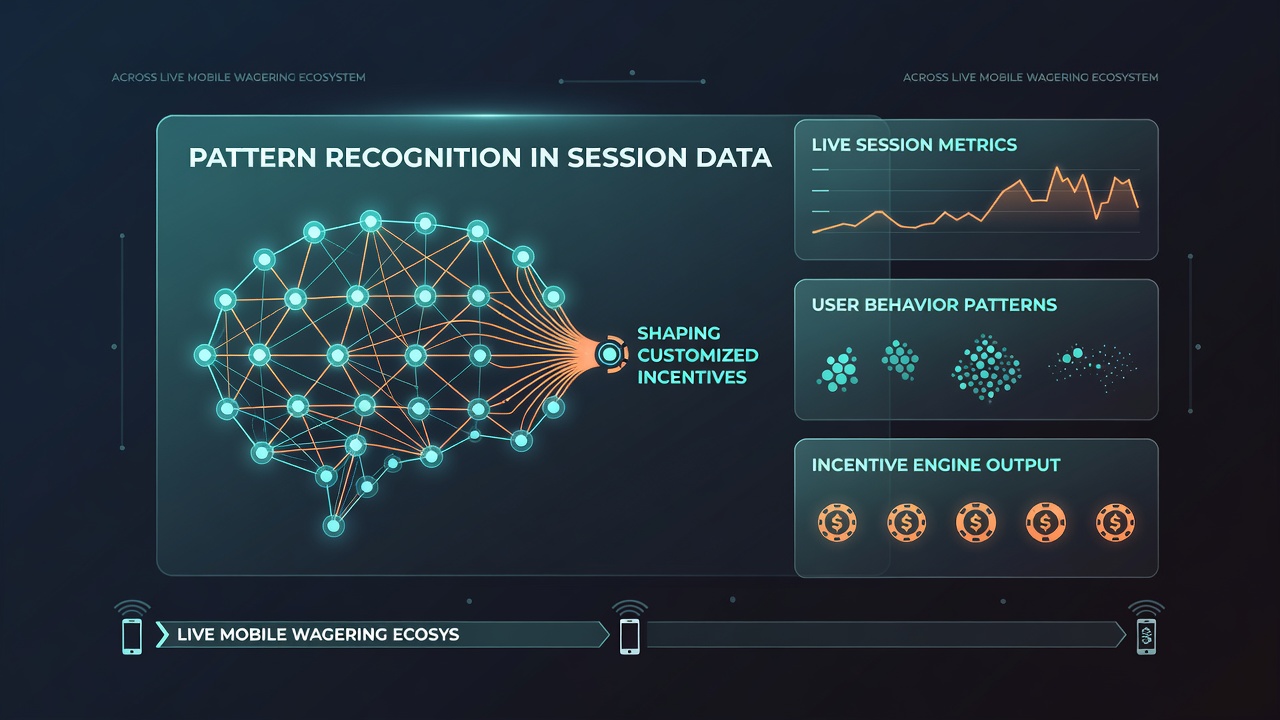
Evidence from North American state gaming reports indicates that such dynamic customization correlates with measurable increases in session frequency among targeted cohorts, particularly when rewards reference prior activity metrics like total hands played or win streaks. Observers note that integration with biometric verification layers further strengthens pattern reliability by confirming user identity across devices, reducing noise in datasets that previously suffered from shared account distortions.
Integration with Live Dealer and Cross-Platform Ecosystems
Live mobile wagering introduces additional data layers from video stream interactions and dealer pace variations, which pattern recognition modules incorporate to refine incentive timing during real-time play. Platforms synchronize these signals with desktop or tablet sessions through unified player accounts, ensuring that recognized patterns persist regardless of access point while maintaining consistent reward sequencing.
Figures from the third quarter of 2026 show that operators deploying cross-device pattern models report elevated average revenue per user in markets where live dealer traffic dominates mobile volume. Those who've studied these implementations point to the importance of edge computing nodes that process pattern matching locally on user devices to minimize latency in incentive delivery during active live sessions.
Regulatory and Technical Considerations in October 2026
Regulatory frameworks in multiple jurisdictions require transparency in how session data informs automated incentives, prompting operators to maintain audit trails that document the decision paths of pattern recognition algorithms. Technical standards emphasize data minimization practices that retain only features essential for model performance, while periodic model retraining accounts for seasonal shifts observed in wagering behavior during October 2026.
Industry associations have published guidelines that encourage validation of pattern accuracy against hold-out datasets to prevent overgeneralization across demographic segments. These measures support compliance while preserving the operational advantages of customized incentive systems that respond dynamically to evolving session patterns.
Conclusion
Pattern recognition applied to session data continues to define how customized incentives operate within live mobile wagering ecosystems, with ongoing refinements driven by advances in algorithmic efficiency and regulatory alignment. Data from October 2026 illustrates sustained adoption of these methods across platforms seeking to optimize user engagement through precise, evidence-based reward allocation.